Sarnath
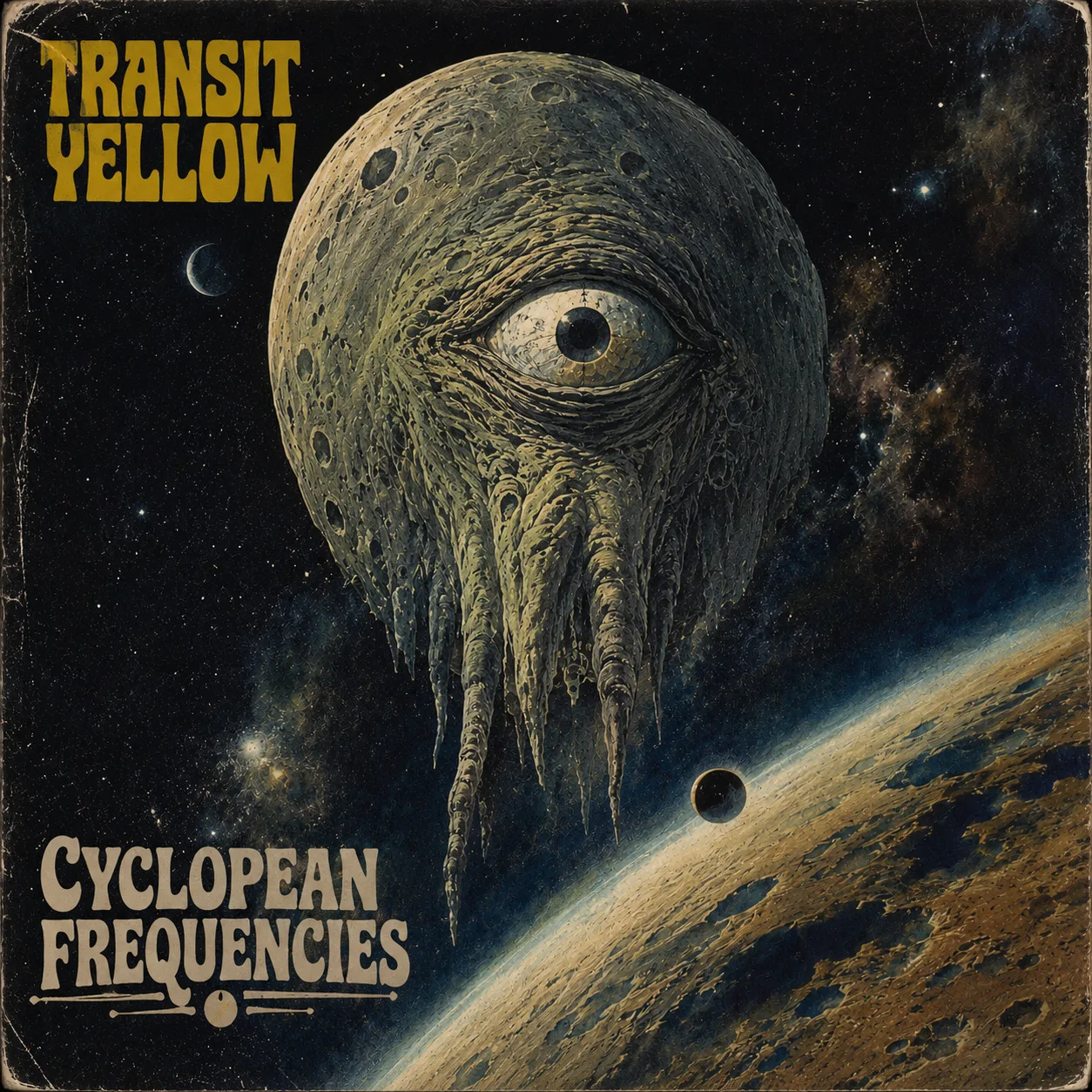
A cosmic horror doom setting of H.P. Lovecraft's "The Doom That Came to Sarnath" (1920). From the debut album Cyclopean Frequencies.
The Story
Lovecraft wrote "The Doom That Came to Sarnath" in December 1919 and first published it in June 1920 in The Scot, a Scottish amateur fiction magazine. It belongs to his Dream Cycle, the early tales of Mnar, Kadath, and the lands the sleeper visits, and stands as a founding move for what would later become the Cthulhu Mythos: an origin myth for a curse that outlasts the memory of what caused it.
In a land called Mnar, at the edge of a still, deep lake, there stood an older city called Ib. The beings of Ib were not men. They were soft, voiceless, coloured green as the water they came from, and they worshipped the water-lizard Bokrug in the shape of a great stone idol.
Then men came to Mnar. They founded the city of Sarnath on the same lake. They hated the people of Ib on sight: for their strangeness, for their silence, for their prior claim to the place. One day the young warriors of Sarnath marched on Ib and killed every one of the beings there. They pushed the bodies into the lake with long spears, because they did not want to touch them. They took the idol of Bokrug home to Sarnath as a trophy.
That night, the high priest of Sarnath was found dead. The idol was gone. The lake had given up no bodies of the drowned.
For a thousand years Sarnath flourished. The killing of Ib passed from history into legend, from legend into curiosity, from curiosity into forgetting. When the thousandth anniversary of the city's founding came, kings and nobles gathered from a hundred lands to celebrate.
A green mist rose from the lake that night. In the morning, Sarnath was gone. The palaces stood empty. There were no corpses.
The travellers who came to the ruin found only reptilian bones on the shore, and, dredged from the mud, a single stone idol, smooth, moss-grown, sea-green. They carried it away as a curiosity. In time, even the memory of Sarnath was forgotten.
The Track
-
Sparse by design
Sarnath is about the curse arriving after everyone has forgotten what it was for. The lake swallows the city, and eventually the memory of Sarnath itself follows. The lyrics are deliberately sparse. The horror is in what erases, not in what fills the space. Green mist. The doom arrived. Under the lake. A place-name repeated until it becomes a chant, then nothing.
Lyrics
-
Green mist.
Green mist.
Silent Sarnath.
Green mist.
The doom arrived.
The doom survived.
Under the lake.
Under the lake.
The shadows grow.
The waters flow.
Silent Sarnath.
No one to know.
Sarnath… Sarnath…
Listen
Sarnath appears on the album Cyclopean Frequencies.
Other Tracks on Cyclopean Frequencies
-
Spin
Draws on H.P. Lovecraft's Azathoth. The blind idiot god at the centre of the cosmos, whose maddening piping keeps the universe turning. Read more →
-
Silver Cylinders Fly
Draws on H.P. Lovecraft's "The Whisperer in Darkness." The Mi-go: fungoid crustacean beings from Yuggoth who harvest human brains into gleaming metal cylinders for transport between worlds. Read more →
-
Alien Stone
Draws on H.P. Lovecraft's "The Colour Out of Space." A meteorite falls on a Massachusetts farm, and something not-quite-a-colour bleeds into the soil, the water, and everything living. Read more →
-
Transit Yellow
The title track. Draws on Robert W. Chambers's The King in Yellow. The play that drives its readers mad; the tattered king; the lost city of Carcosa. Read more →
-
Violet Bleed
Draws on H.P. Lovecraft's "The Dreams in the Witch House." Non-Euclidean geometry as a route between worlds. Read more →
-
The Beast
Draws on H.P. Lovecraft's "The Outsider." The narrator who climbs from the tomb into a candlelit ballroom and sees, in a great mirror, what the guests are fleeing from. Read more →
-
Hound of Tindalos
Draws on Frank Belknap Long's "The Hounds of Tindalos," a foundational Cthulhu Mythos story of the entities that dwell in the angles of time and hunt through the smoothness of curves. Read more →